Source Fabric Impact Penetration Tester for Textile Testing
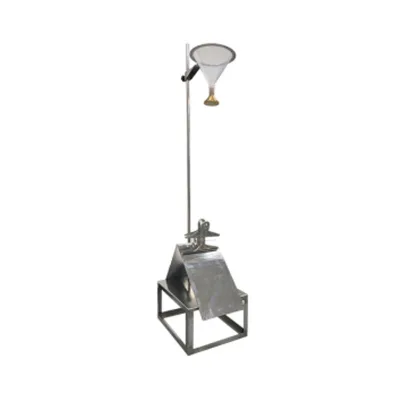
Explore 30 fabric impact penetration tester models designed for apparel and textile quality assurance. Compare key specifications, CE certifications, and pricing from verified global suppliers to identify the ideal testing equipment for your laboratory requirements; compare the available evidence and request quotations based on your requirements.
Key considerations
Products List




Comprehensive Sourcing Guide
Fabric Impact Penetration Tester Sourcing Guide
Procuring a fabric impact penetration tester requires distinguishing between universal textile testing units and specialized equipment designed for specific material resistance. The market offers machines ranging from compact 12kg units to heavy-duty 300kg systems, each tailored for different testing environments and fabric types. Buyers must first identify whether their primary need involves measuring the penetration resistance of general fabrics or evaluating the impact performance of rainproof clothing, as the machine architecture varies significantly between these applications.
Selection should also account for the operational mode, as some units are semi-automatic while others may require manual control or dynamic loading methods. The physical footprint and weight of the equipment are critical logistical factors, with observed models ranging from 50kg to over 250kg and dimensions spanning from 550mm to 5500mm in height. Understanding these physical constraints ensures the testing facility can accommodate the machinery and that the selected unit aligns with the specific testing protocols required for your product line.
Product Scope and Observed Listing Signals
The product scope for fabric impact penetration testers includes specialized devices like the Impact Penetration Tester and Rainproof Clothing Impact Performance Tester, which are designed to evaluate material durability under stress. Listings often highlight specific applications such as measuring the penetration resistance of fabrics or testing coating cloth, tent cloth, and tarpaulin. Buyers should verify that the listed application matches their specific testing needs, as some machines are optimized for high-pressure hydrostatic head testing while others focus on general appearance quality and fabric integrity.
Observed listing signals indicate a wide variance in product models, such as MB17, M127, and M023C, each with distinct standard dimensions and weight capacities. While some units are described as new and non-customized, others explicitly offer customization services and OEM/ODM capabilities. It is essential to scrutinize the listed weight and dimensions against your facility requirements, as the observed range spans from 12kg to 500kg, and the standard export packing varies from wooden cases to sturdy wooden boxes depending on the manufacturer.
Technical Specifications to Verify
Technical verification must begin with the machine's standard compliance, as listed specifications reference critical industry benchmarks like AATCC 42, GB/T 24218.17, and BS EN 14360:2004. Buyers should confirm that the specific model they intend to purchase supports the exact standards required for their quality assurance protocols, as some units are designed for AATCC 127 or ASTM D751, while others adhere to DIN 53886 for hydrostatic head testing. Ensuring the machine's standard alignment prevents costly re-testing and guarantees that the data generated is internationally recognized.
The operational mechanics and control systems are equally vital, with some units featuring servo motors and dynamic loading methods while others rely on manual control. Accuracy ratings, such as the observed 0.5% tolerance, should be validated against your internal quality thresholds, and the test mode, whether supercharge or leaking method, must suit the material being evaluated. Additionally, the fixture configuration is a key specification, as some models come with one standard fixture for tensile strength while others offer customization options to accommodate unique sample sizes or testing geometries.
Compliance and Safety Documentation
Compliance documentation is a primary requirement for international procurement, with CE certification appearing frequently across the observed product listings. Buyers must request and verify the specific certificate documents, as some suppliers provide CE, ISO 17025, RoHS, FCC, and SGS certificates, while others may only list CE. It is crucial to ensure that the certification covers the specific electrical and mechanical safety aspects of the machine, particularly for high-voltage or high-pressure testing equipment used in industrial environments.
Safety and warranty terms are also integral to the procurement decision, with a standard 12-month warranty observed in many listings. Buyers should explicitly confirm the scope of this warranty, including coverage for motor types, control systems, and structural components, to mitigate long-term operational risks. Furthermore, the origin of the product, often listed as China or Guangdong, should be cross-referenced with local import regulations to ensure that all safety and environmental compliance documents are valid and transferable to the destination country.
Cost Drivers and Commercial Terms
Cost drivers for fabric impact penetration testers are heavily influenced by the machine's weight, dimensions, and the complexity of its control systems. The observed price range of 100 to 20,000 USD reflects the disparity between basic manual units and advanced servo-controlled systems with high-precision accuracy. Buyers should analyze the total cost of ownership, considering that heavier machines with larger footprints often incur higher shipping costs due to the requirement for sturdy wooden export cases or standard export wooden boxes.
Commercial terms regarding customization and minimum order quantities (MOQ) are also significant factors in the final pricing structure. While many listings indicate an MOQ of 1, the availability of OEM, ODM, and non-standard customization services can significantly alter the unit price and lead time. Buyers must clarify whether the quoted price includes the standard fixture or if additional accessories and custom fixtures are billed separately, as these variables can substantially impact the overall budget for the procurement project.
Supplier Qualification and Quality Control
Supplier qualification should focus on the manufacturer's ability to provide comprehensive after-sales support and technical documentation. Given that many suppliers offer OEM and ODM services, it is essential to verify their track record in delivering machines that meet specific international standards like ASTM D903 or JIS K6854. Buyers should request case studies or references for similar textile testing equipment to ensure the supplier has the technical expertise to support complex testing protocols and machine calibration.
Quality control processes must be validated through the supplier's internal testing procedures and the availability of third-party inspection reports. Since the observed products include various models with different weight capacities and standard dimensions, buyers should insist on pre-shipment inspections to verify that the delivered unit matches the agreed specifications. This includes checking the condition of the machine, ensuring the packaging is robust enough for export, and confirming that all safety certifications are authentic and up to date.
Long-Term Procurement Checks
Long-term procurement checks should prioritize the availability of spare parts and the longevity of the machine's critical components. Buyers need to assess the supplier's inventory for parts like servo motors, control panels, and fixtures to ensure minimal downtime during the machine's operational life. The warranty period of 12 months is a starting point, but a robust long-term plan should include a service agreement that covers maintenance, calibration, and potential upgrades to the testing software or hardware.
Finally, buyers must establish a protocol for periodic re-verification of the machine's performance against the original standards. Over time, mechanical wear and environmental factors can affect the accuracy of the impact penetration tester, necessitating regular recalibration to maintain compliance with standards like AATCC 42 or BS 3321. Establishing a relationship with a supplier who offers ongoing technical support and calibration services ensures that the testing data remains reliable and that the equipment continues to meet the rigorous demands of textile quality assurance.
FAQs
What standards does the fabric impact penetration tester comply with?
The equipment complies with AATCC 42, GB/T 24218.17, and BS EN 14360:2004 standards. These guidelines ensure accurate measurement of fabric penetration resistance. The machine is designed for universal textile testing applications. It supports appearance quality testing for various fabric types. Compliance with these standards guarantees reliable and repeatable test results for quality control purposes.
Can the fabric impact penetration tester be customized for specific needs?
Yes, customization is available for this testing equipment. Buyers can request specific modifications to suit unique testing requirements. The manufacturer offers OEM and ODM services for non-standard configurations. Custom fixtures and accessories can be provided to enhance testing precision. This flexibility allows laboratories to adapt the machine for diverse textile evaluation tasks.
What is the weight and packaging of the fabric impact penetration tester?
The machine weight varies by model, ranging from 12kg to 300kg. Packaging is provided in standard export wooden cases or sturdy wooden boxes. This ensures safe transportation and protection during shipping. The robust packaging prevents damage during transit. Buyers receive the equipment securely packed for immediate installation and operation upon arrival.
What certifications does the fabric impact penetration tester hold?
The tester holds CE and ISO 17025 certifications. Some models also include RoHS, FCC, and SGS certificates. These certifications verify compliance with international safety and quality standards. The CE mark indicates conformity with health, safety, and environmental protection standards. ISO 17025 ensures the testing laboratory meets rigorous competence requirements for calibration.
What warranty is provided for the fabric impact penetration tester?
A 12-month warranty is provided for the fabric impact penetration tester. This covers manufacturing defects and ensures product reliability. The warranty supports initial operational stability and performance. Buyers receive technical support during the warranty period. This coverage provides peace of mind for laboratory investments and long-term testing operations.
Which models are available for fabric impact penetration testing?
Available models include MB17, M127, M023C, HY-963H, and ZH-TB-500. Each model offers different specifications and capabilities. The MB17 is suitable for general appearance quality testing. The M127 and M023C serve specialized hydrostatic head testing needs. Buyers can select the model that best fits their specific textile testing requirements.
How is the fabric impact penetration tester controlled and operated?
The tester features manual control for precise operation. Some advanced models utilize servo motors for enhanced accuracy. The loading method is dynamic load for realistic testing conditions. Operators can adjust settings to match specific test protocols. The control system ensures consistent performance and reliable data collection for textile evaluation tasks.